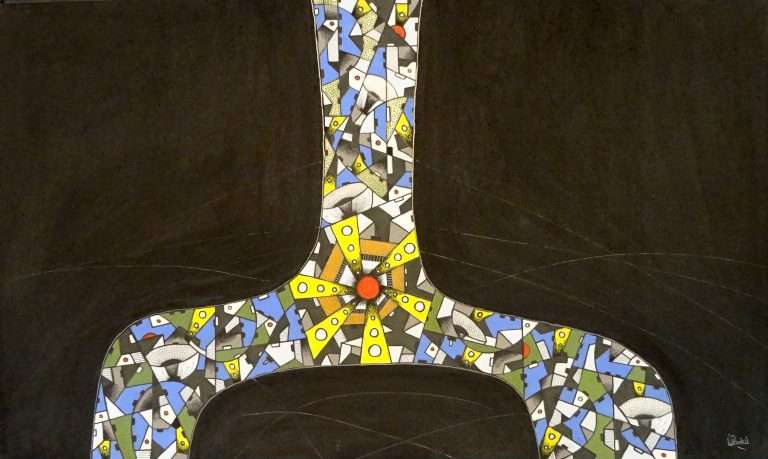
To Calabria emerged after my visit to the village where my mother was born—a deeply moving return to my roots. As I walked the winding paths and spoke with the women who knew her, I was struck by the quiet strength woven through their stories. Tales of hardship during WWII echoed through the village—of women raising children alone while their husbands journeyed to Australia in search of a better future.
My mother spent four years raising my two older brothers without my father, who had travelled ahead to lay the foundations of a new life. These women, including my mother, took on the roles of both nurturer and provider. Their resilience became the heart of this piece.
On closer inspection, the painting reveals short-cropped hair beneath the flowing locks—a symbol of the dual nature they embodied: softness and strength, grace and grit. The place where the river meets the mountain marks the communal space where women gathered to wash, share stories, and tend their produce. It was their sanctuary, their hearth, until the men returned—or, in my mother’s case, until she was finally sent for, still carrying the weight of those years.